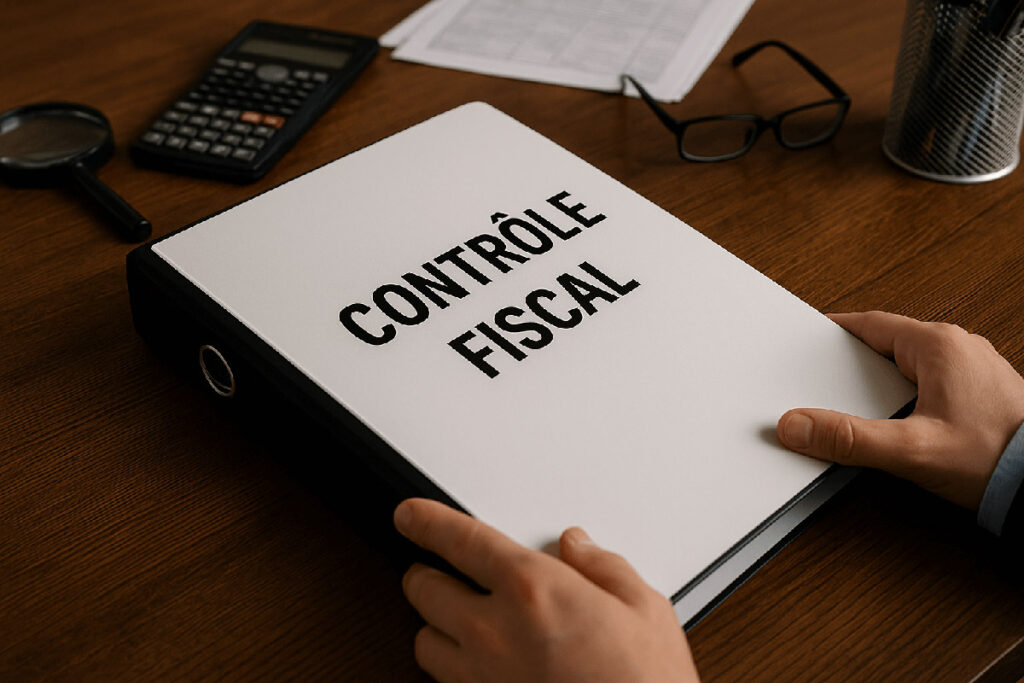
Tax optimisation means reducing a company’s tax burden by using mechanisms expressly provided by law, without circumvention or artificial arrangements. Done properly, it improves cash flow, profitability and investment capacity. Done poorly, it can expose you to reassessments, penalties, or even litigation. The goal is not to “pay zero”, but to pay the right amount of tax and secure your key decisions.

What is corporate tax optimisation?
A simple definition: use the law, do not circumvent it
Corporate tax optimisation refers to all actions that allow a company to reduce tax or manage how and when tax is paid (timing, tax base or calculation methods), relying on mechanisms explicitly provided by tax law. This may involve, for example, proper use of deductible expenses, depreciation, relevant tax options, or a legal structure that is consistent with the company’s business.
In other words: when it is lawful, tax optimisation is not a “magic scheme”. It is a management approach: analysing your flows, investments and management choices, then implementing a tax-efficient strategy that is legally sound and defendable.
Lawful optimisation, “aggressive” optimisation, fraud: what is the difference?
The term “optimisation” is often misunderstood. For a business, it is essential to distinguish between:
Lawful tax optimisation: based on mechanisms provided by law, supported by real economic rationale and consistent documentation.
Aggressive tax optimisation: aimed at exploiting loopholes or complex arrangements, sometimes at the edge of the spirit of the law. Depending on the facts, it may be challenged.
Tax fraud: illegal conduct (concealment, false statements, artificial arrangements with no economic reality) which can lead to severe sanctions.
For a corporate-focused strategy, the key idea is this: useful optimisation is defendable optimisation. It should rest on economic substance (real roles, real means, justified flows) and be implemented with adequate formalisation. That is what allows you to optimise while keeping tax risk under control.
Why optimise a company’s tax position?
Very practical objectives: corporate tax, cash flow, profitability and investment capacity
In practice, tax optimisation is not theoretical: it translates into available cash (or not) to fund your activity. A better-managed tax burden can improve:
cash flow (fewer surprises and better anticipation of due dates),
profitability (lower tax cost with the same perimeter),
investment capacity (recruitment, equipment, R&D, business development),
decision security (especially where an audit is possible).
But often, the biggest benefit is elsewhere: making your decisions tax-consistent. Many companies pay too much (or take on risk) simply because key options were not considered at the right time, or because operational reflexes were not structured.
When optimisation has the greatest impact
It is rarely efficient to wait until year-end to “optimise” in a rush. The most robust levers typically arise at key moments in a company’s life:
- At incorporation: choice of structure, tax regime, available options, organisation of roles and flows.
- During growth: hires, investments, new markets, contract/process structuring (VAT, invoicing, margins).
- Before a major investment: depreciation, financing, timing, ownership structure, VAT recovery when applicable.
- During a reorganisation: shareholder changes, group/holding structuring, reallocating activities, rationalising flows.
- Before distributions: salary vs dividends, tax effects, consistency with the manager’s broader strategy.
- Before a sale/transfer: preparation, valuation, securing sensitive points, documentation and risk anticipation.
In short: tax optimisation is most effective when it is anticipated. Properly framed, it becomes a management tool aligned with strategy. Poorly anticipated, it becomes last-minute adjustments that are often less effective and sometimes riskier.
The most common lawful tax optimisation levers (for businesses)
There is no one-size-fits-all lever: effectiveness depends on your activity, business model, stage of development and objectives (invest, distribute, restructure, transfer). That said, some levers recur frequently in practice, provided they are used methodically.
Deductible expenses, depreciation, provisions: the fundamentals
Before any “scheme”, the first optimisation is often a tax base optimisation: ensuring that expenses genuinely incurred for the business are properly recorded, documented and deductible, and that investments are depreciated consistently.
Three recurring points:
- Operating expenses: deductibility requires a link to the company’s interest, economic reality and robust supporting evidence (invoices, contracts, proof of performance).
- Depreciation: spreads the cost of an asset over its useful life. Well configured, it smooths tax cost and supports investment planning.
- Provisions: where a risk or cost is likely and sufficiently justified, a provision can be a planning tool (but it must be properly framed and documented).
These levers look simple, yet they often trigger reassessments when poorly formalised (missing evidence, inconsistencies, reclassification of expenses, etc.).
Tax regime choices and options: when they truly matter
Part of optimisation comes from options chosen at key moments (incorporation, changes in activity, threshold crossings, reorganisation). Some are neutral in the short term, but highly impactful over multiple fiscal years.
Rather than listing options exhaustively, the principle is this: a tax-efficient business is a business that knows its options and makes decisions consistent with its strategy (invest, remunerate, distribute, grow).
Incentives and credits: use them without overexposure
There are incentive mechanisms (credits, reductions, exemptions or carry-forward tools) intended to support investment, innovation, business creation or specific activities. They can be very useful, but must be handled carefully: the key is to strictly meet eligibility requirements and be able to demonstrate compliance.
In practice, a sound approach is to:
- identify incentives that fit your business (not those that are simply “trending”),
- check eligibility conditions,
- set up simple but robust documentation,
- anticipate how the tax authorities may analyse your case.
Structuring (holding company, group, etc.): when it makes sense
Legal structuring becomes a lever when it responds to a clear economic rationale: organising growth, separating activities, managing investments, or preparing a sale/transfer.
A relevant structure is not only about “paying less”: it must serve the business (governance, financing, acquisitions, asset protection, rationalising flows). That is precisely what makes it more robust in discussions with the tax authorities.
VAT and consumption taxes: very frequent risk areas
VAT is one of the most sensitive areas because it affects daily processes (invoicing, collections, terms and conditions, international activities, services). Errors are often unintentional but can be costly: incorrect rates, incorrect place-of-supply analysis, questionable deductions or reporting timing issues.
Lawful optimisation here is often about securing: clarifying the rules applicable to your model, standardising documents, and implementing internal reflexes that prevent recurring mistakes.
Key limits: staying within a “defendable” strategy
<p>Tax optimisation is valuable when it is <strong>stable</strong>, meaning it withstands critical review (internally, by your accountant, or by the tax authorities in an audit). That requires knowing red lines and adopting a security mindset.</p>
Risk signals: artificial arrangements, lack of economic rationale, lack of substance
A tax lever becomes risky when you cannot explain simply what it is for for the business, beyond the tax effect. Strategies are most fragile where:
- the structure is purely artificial (no real business need),
- flows are inconsistent (invoicing with no real service, remuneration with no consideration, etc.),
the entity lacks substance (no clear role, no means, no real operations),
- documentation is insufficient (choices and chronology cannot be justified).
These elements — more than the tax technique itself — often trigger challenges and reassessments.
Abuse of law: the idea to remember
Without going into technical debates, the logic is this: the authorities may challenge an arrangement where its principal (or sole) purpose is to obtain a tax advantage, without sufficient economic justification, or where it diverts the spirit of a rule.
This is important because it highlights a simple rule: optimisation must remain consistent with the reality of your business. The more understandable, documented and anchored in real needs (financing, organisation, development, governance) your decisions are, the more defendable they become.
How to secure a tax optimisation strategy
Security does not rely solely on legal texts: it is mostly about method. A few practical best practices:
- State the economic purpose of each choice: why this option, why now, and what benefit (beyond tax)?
- Document: contracts, resolutions, roles, deliverables, simple but consistent evidence.
- Respect chronology: useful decisions are often anticipated, not rushed at year-end.
- Ensure internal consistency: accounting, legal formalities, invoicing and operational reality should tell the same story.
- Balance gain vs risk: a marginal tax benefit rarely justifies a fragile or heavy arrangement.
In short: the best tax optimisation is the one that improves management while remaining easy to explain and easy to justify.
How does a tax optimisation advisory engagement work?
Effective optimisation is not a list of “tricks”. It is a structured process that starts with your reality (activity, flows, objectives) and leads to concrete, documented and implementable choices. Here is how such an engagement typically works.
Step 1: assessment (activity, flows, objectives, risks)
Everything begins with a scoping phase. The goal is to quickly identify what has real tax impact: business activity, current structure, applicable regimes, flow organisation (invoicing, remuneration, dividends, investments) and risk points (VAT, international aspects, recurring expenses, contracts).
This also helps distinguish what requires a structural approach (organisation, options, structuring) from what is more operational (processes, best practices, documentation).
Step 2: scenarios (benefits, constraints, risks, timeline)
Based on the assessment, several scenarios can be developed. The objective is not to find the most “aggressive” lever, but the most relevant for your business: coherent, realistic and defendable.
Each scenario is analysed across four angles:
- tax interest (expected benefit, impact on corporate tax, multi-year effects),
- constraints (formalities, required documents, internal implementation),
- risk level (possible discussion points, conditions to meet),
- timeline (optimal timing, deadlines, decision sequencing).
This approach supports calm arbitration: sometimes a slightly less “profitable” tax option is preferable if it is much easier to implement and defend.
Step 3: implementation and security (documents, processes, evidence)
Once a path is chosen, the focus becomes security. This is often where the most value is created: formalising correctly, documenting properly and ensuring operational reality matches the chosen strategy.
Depending on the engagement, this may include:
- drafting or reviewing legal documents (contracts, agreements, board/shareholder minutes, settlement protocols),
- setting up internal processes (VAT/invoicing, evidence management, validation reflexes),
- building a simple, consistent audit trail file,
- ongoing follow-up to adjust as the business evolves (growth, new flows, investments, restructuring).
The ultimate goal is twofold: a strategy that is tax-efficient and sustainable over time, including in the event of an audit.
When should you consult a tax lawyer?
Without opposing roles (and without repeating what is already covered in our dedicated article), there are situations where legal support is particularly valuable: when the stakes are high, the structuring is sensitive, or there is a realistic audit or dispute risk.
Situations where support is most relevant
- Structuring/restructuring: group structuring, activity reorganisation, intra-group flows.
- Strategic transactions: acquisition, sale, transfer, partner entry/exit.
- VAT or international issues: technical models, recurring risk, costly mistakes.
- Tax audit or pre-dispute: when you want to secure a position, anticipate discussions, or prepare your file.
- Third-party proposals: when you are offered a “miracle solution” and want to verify its robustness before committing.
Working pragmatically with your accountant (in a complementary way)
In many cases, the most effective approach is collaborative: your accountant provides a granular view of your figures and accounting organisation, while the lawyer secures the legal dimension, the defendability of the strategy and the associated documentation. When appropriate, this complementarity helps move fast and reduce grey areas.
If you want to explore the topic further, you can read our full article: Tax lawyer or accountant: which should you choose?
FAQ: corporate tax optimisation
Is tax optimisation legal?
Yes, in principle, tax optimisation is legal when it consists in using mechanisms provided by law and organising the business in a tax-efficient way, without artificial arrangements. The key is to maintain an economically coherent and documented strategy so that choices are not reclassified as abusive or artificial.
What are the most common levers to reduce corporate income tax?
The most common levers are often the simplest: proper handling of deductible expenses, consistent depreciation, justified provisions, tax options chosen at the right time, and, where relevant, legal structuring consistent with the business. Incentive mechanisms (credits, reductions, exemptions) can also help, provided eligibility conditions are strictly met.
Is a holding company always a good idea for optimisation?
No. A holding company can make sense when it serves a clear economic purpose: group organisation, financing, investment, governance, or preparing a sale/transfer. If created without real utility and only for a tax effect, it may become heavy to manage and more exposed to challenge. The right question is not “does it reduce tax?” but “what is it for, economically?”
How can you avoid reclassification or abuse-of-law risk?
To reduce risk, favour a simple, readable and coherent strategy based on real business needs. In practice: state the economic purpose, document choices (decisions, contracts, deliverables), respect a logical chronology, and ensure substance in the structures implemented. Finally, weigh gain vs risk: a fragile optimisation for a marginal gain is rarely a good decision.
When should you request a written opinion?
A written opinion is particularly useful when the stakes are high, the decision commits the business for several years (structuring, reorganisation, major investment), or when you want to secure a position ahead of a risk situation (audit, pre-dispute, discussions with the authorities). It helps formalise the rationale, clarify conditions to meet and organise documentation.
Conclusion
Tax optimisation is not a promise to “pay zero”. It is a management approach: using legal tools to improve cash flow, support investment and secure key decisions, while remaining defendable.
If you want to clarify your options, secure a decision or structure a tax strategy consistent with your business, Sion Avocat can support you through an advisory engagement or a tailored Coaching & Advice format.